
structure in a winter garden
The arrival of cold weather in November has had an impact on how we feel and experience our gardens at this time of the year.
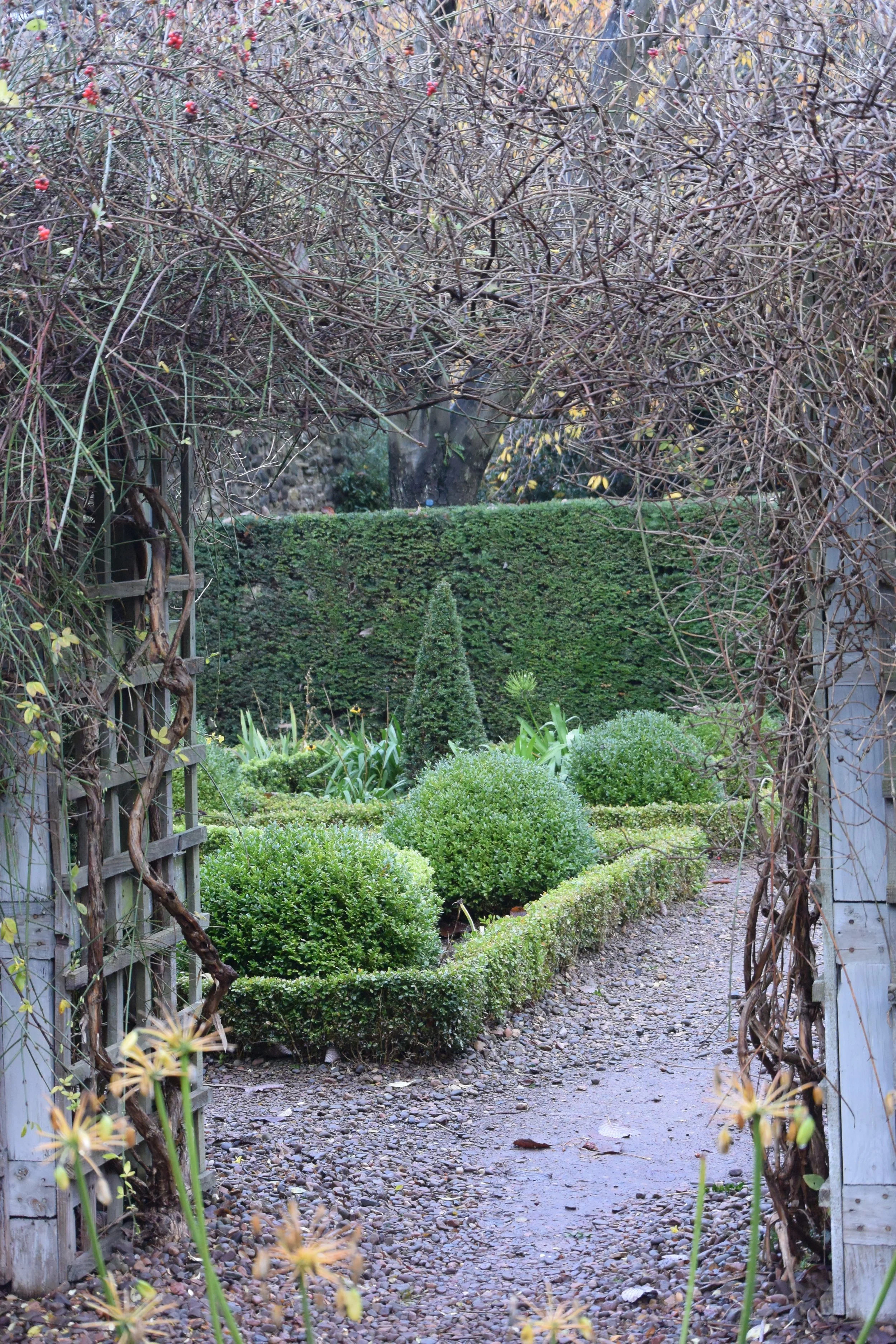
The deciduous trees have shed their rusty foliage, leaving their branches bare and exposed. The garden is preparing for winter dormancy.
Now we can appreciate the shapes of the trees - their gnarled and twisted branches. We are also able to notice the patches of emerald green lichen, so vivid and prominent in the sharp winter sunlight.
We can enhance the overall experience of our winter garden by improving the garden’s planting design.
Many gardens might look a bit bare and empty at this time of the year, however, we can elevate their overall garden design by introducing a couple of evergreen perennial plants and shrubs, and build an eye-catching garden structure.
Creating the right structure for your garden should be one of the first objectives when thinking about a design for a garden.
A garden structure is often achieved by planting the right shrubs and trees.
When selecting the trees and shrubs for a garden we need to think about a good balance between deciduous and evergreen plants.
Why it is important to create a garden structure?
The right structure builds a sense of place in a garden. This is crucial as it shapes how we feel in a garden. The structure in a garden is achieved by using the right plants to guide us through the garden space, which can impose a certain tempo and rhythm as we move through.
We can use evergreen elements, like for example evergreen viburnum shrubs or some topiary balls of Taxus, to highlight certain elements of the garden, like for example the entrance or to simply create a sense of order and balance by repeating the same evergreen plants along a garden border.
The evergreen elements of the planting come to life especially during winter months. They provide an appealing focal point to which our eye is drawn to and where our gaze can rest.
Deciduous plants can also serve as good structural elements of the winter garden. There are many trees and shrubs that for example have very attractive bark.
The colourful, patterned bark of some cherry trees or vivid red stems of Cornus shrubs can provide variety and make a garden in winter more attractive.
Other deciduous plants, like for example grasses, can bring a vertical element and height as well a sense of movement as the winter winds cross your garden.
To create an attractive winter garden, we need to think about the overall structure of our planting design. We can do it by making sure there are enough evergreen elements in a garden to counterbalance its restrained winter character. Starting simply by adding a couple of evergreen shrubs will definitely make a big change. Not to mention that many evergreen shrubs come with the added bonus of having flowers in winter, which also happen to have very pronounced fragrance, especially in contrast with crisp winter air.